Published a protocol paper for a multi-center specific clinical study on the efficacy of a VR-based pediatric amblyopia training program medical device (unapproved)
InnoJin Inc. Publishes Protocol Paper on Multicenter Specific Clinical Research Concerning the Efficacy of a VR-Based Training Program Medical Device (Unapproved) for Pediatric Amblyopia
InnoJin Inc. (Headquarters: Bunkyo-ku, Tokyo), a university-launched startup company, has initiated specific clinical research to evaluate the efficacy of its under-development "VR-Based Training Program Medical Device (Unapproved) for Pediatric Amblyopia" (approval to conduct research obtained on August 26, 2025) and has published a protocol paper outlining the study implementation plan.
Research Background
Amblyopia, commonly known as lazy eye, is a condition in which the vision of one or both eyes does not develop properly, with a pediatric prevalence estimated at approximately 1-5%. In Japan, there are approximately 210,000 amblyopia patients, and the resulting social loss is estimated to reach about 2.2 trillion yen.
Standard treatments for amblyopia generally involve wearing fully corrective glasses and undergoing occlusion therapy using an eye patch on the stronger eye. However, because occlusion therapy blocks the better-seeing eye, it imposes a significant psychological and physical burden on children, often making it difficult to sustain the treatment. Furthermore, children's visual health development has a sensitive period until around age 10; missing this window could result in failing to achieve sufficient therapeutic effects.
A New Approach Utilizing VR
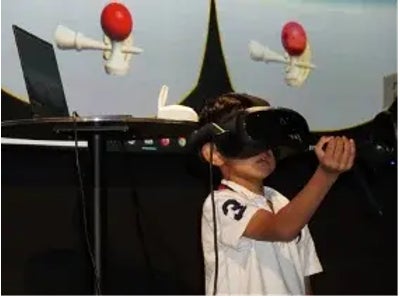
Against this background, our company is working on the development of an innovative amblyopia training program medical device utilizing Virtual Reality (VR) technology. By providing a new treatment approach where children can naturally undergo amblyopia training simply by wearing VR goggles and playing games like kendama, table tennis, and tennis, we aim to reduce the psychological burden associated with amblyopia training, and to improve treatment adherence (the ability to voluntarily proceed with treatment) and therapeutic efficacy. If the efficacy of VR-based pediatric amblyopia training is confirmed in this study, we hope to obtain medical device approval in the future and deliver the treatment as an amblyopia training program that can also be conducted at home through medical institutions.
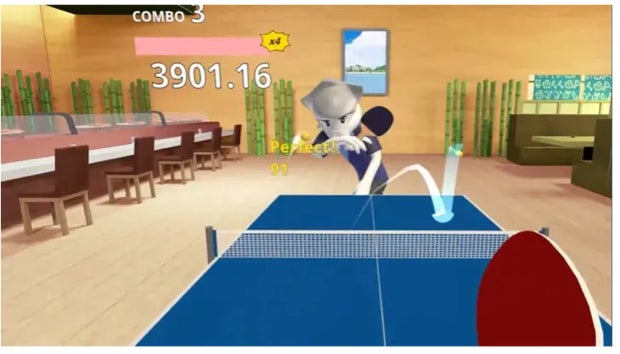
Table Tennis Game Scene
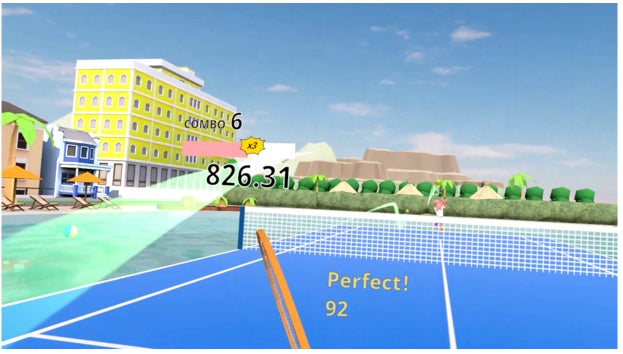
Tennis Game Scene
About the Protocol Paper
A protocol refers to the implementation plan and procedures of a study, and a protocol paper is these details compiled into a paper format alongside academic information. Our company published a protocol paper regarding the multicenter specific clinical research on the efficacy of the VR-based training program medical device (unapproved) for pediatric amblyopia on January 21, 2026, in a peer-reviewed academic journal. This paper was published after undergoing peer review by experts and being approved. The study is being conducted in accordance with this protocol.
Recruitment of Participants
Currently, in collaboration with multiple medical institutions, we are proceeding with efforts toward implementing specific clinical research regarding the efficacy of our VR-based training program medical device (unapproved) for pediatric amblyopia.
As of February 1, 2026, we have started recruiting study participants from amblyopia patients currently visiting the Ophthalmology Department at Toho University Ohmiri Medical Center. If you are considering participating in the study, please contact the attending physician at our department.
We will continue to start recruiting participants at medical institutions as they sequential receive research approvals.
▪️ About the Paper
Title: Virtual Reality–Based Program for Pediatric Patients With Amblyopia: Protocol for a Multicenter, Randomized, Open-Label, Two-Arm Study
Authors: Ken Nagino1,2,3,4, Yuichi Okumura2,3,4, Masakazu Hirota3,5,6,7, Saiko Matsumura8, Nao Matsumoto8, Takashi Negishi4, Akie Midorikawa-Inomata1,2,3, Makiko Ui9, Takao Hayashi5,6, Hiroshi Hori8, Shintaro Nakao4, Takenori Inomata1,2,3,4
Author Affiliations: 1 Department of Hospital Administration, Juntendo University Graduate School of Medicine, 2 Department of Telemedicine and Mobile Health Research and Development, Juntendo University Graduate School of Medicine, 3 InnoJin Inc., 4 Department of Ophthalmology, Juntendo University Graduate School of Medicine, 5 Department of Orthoptics, Faculty of Medical Technology, Teikyo University, 6 Department of Ophthalmology, Teikyo University School of Medicine, 7 Graduate School of Medical Data Science Program, Teikyo University, 8 Department of Ophthalmology, Toho University School of Medicine, 9 CS Eye Clinic
Journal: JMIR Research Protocols
URL: https://www.researchprotocols.org/2026/1/e85194/
DOI: 10.2196/85194
InnoJin Inc. will continue to focus on the research and development of innovative medical solutions in order to realize a "society where all children can grow up without visual handicaps."
Press Release Article